Showing posts with label 18 Reasons. Show all posts

Sunday, May 24, 2015

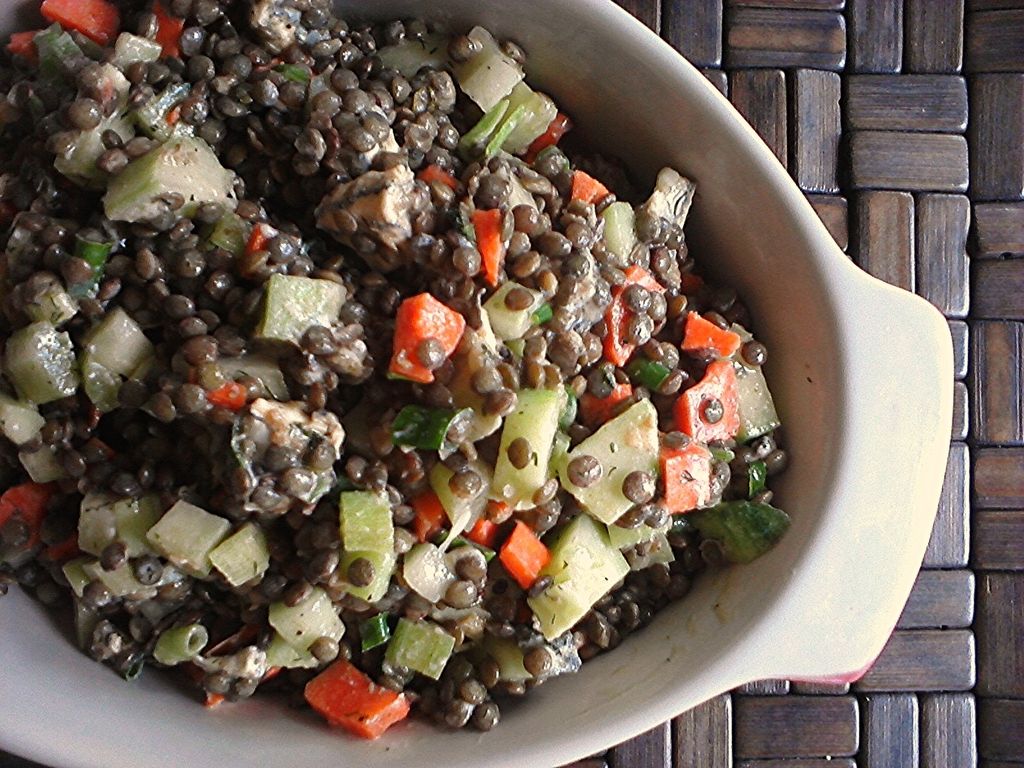
Warm Lentil & Goat Cheese Salad


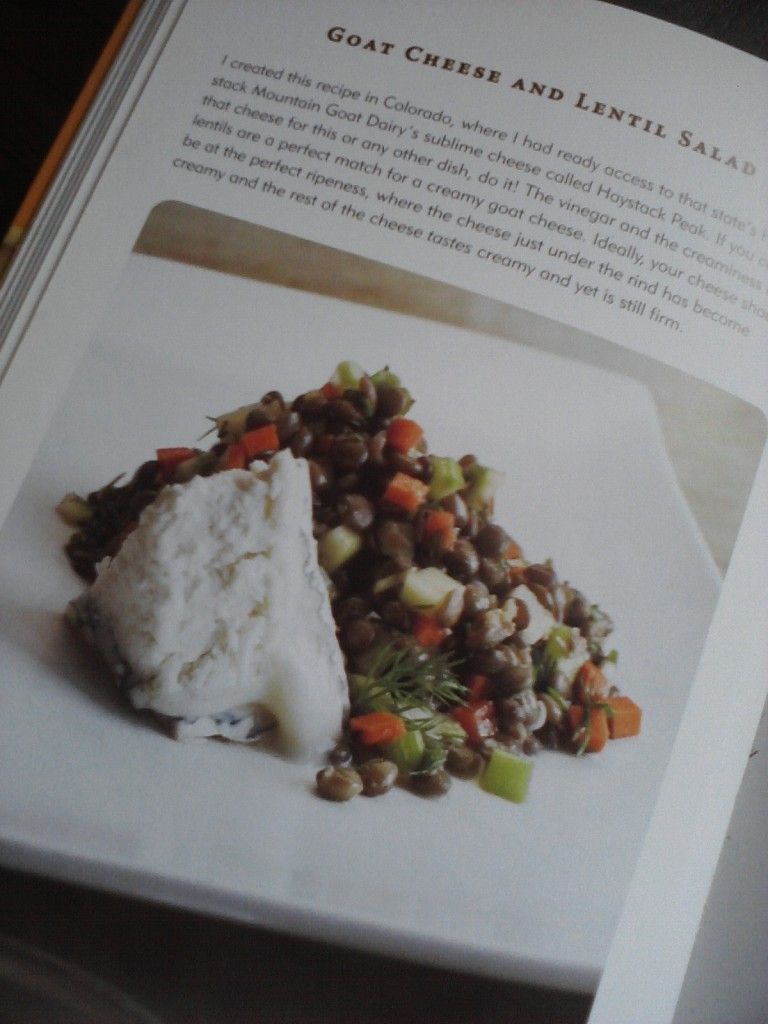
I've had this recipe bookmarked for months. It's from Laura Werlin's Cheese Essentials, a book I found in the breakroom at work and borrowed for enhancing my study of all things cheese. I'm a big fan of warm lentil salads with goat cheese since trying something like this in one of the 18 Reasons cooking classes I took a while back focusing on the beauty of budget friendly meals revolving around lentils.
I made a few tweaks to the original recipe.  I prepared the salad while the lentils were still warm whereas the original recipe instructs for the lentils to be cooled to room temperature. I find the warm lentils absorb the flavors of the dressing and allow the cheese to soften a bit and adding a little creaminess to the salad. The other adjustment I made was to chop and crumble the goat cheese then stir it into the warm salad. The original recipe places a one ounce wedge of cheese onto the side of the plated salad. That makes for a lovely presentation when using a striking looking cheese like Humboldt Fog and if serving this salad to guests.

I'm much more pedestrian and make a big bowl of this all for myself so I can enjoy it for a few days. Humboldt Fog is a lovely lightly aged goat's milk cheese from Cypress Grove in Humboldt County here in California. It has a vegetable ash layer running through the middle and beneath the white bloomy surface. It ripens from the surface where it's soft and oozy. The center is firm and crumbly. One of the things I love about good goat cheese is that it changes as it ages. There's more complexity to aged goat cheeses like Humboldt Fog that develop a bloomy (the white fuzzy) rind. The crumbly center is mild and tangy, the oozy edge introduces a bit of goaty personality and the bloomy rind is a little bitter. I love the combination of all of these textures. This salad would be just fine using a more commercial log style goat cheese if you're going the pedestrian route.

Warm Lentil and Goat Cheese Salad
adapted from Laura Werlin’s Cheese Essentials

For the lentils:
1 cup dried lentils
1 large garlic clove, peeled

For the dressing:
2 tablespoons plus 2 teaspoons red wine vinegar
2 teaspoons balsamic vinegar
1 ½ teaspoons mustard
2 tablespoons chopped fresh dill plus whole sprigs for garnish
¼ teaspoon kosher salt
Freshly ground pepper
3 tablespoons plus 2 teaspoons extra-virgin olive oil

For the salad:
4 scallions, finely chopped
1 medium carrot, peeled and cut into 1/8 inch dice
1 large celery stalk cut into 1/8 inch dice
About 1 cup peeled, finely diced English cucumber
8 ounces Humboldt Fog goat cheese

To prepare the lentils: Fill a 2 quart sauce pan about half way with water. Add the lentils and garlic. Bring to a boil, then reduce to a simmer and cook the lentils until tender but not mushy. After 15 minutes taste to determine doneness and keep checking every 5 minutes until they reach the desired consistency. Drain well and toss into a large bowl.
Combine the dressing ingredients into a jam jar and shake until emulsified. Toss into the bowl of warm lentils.
For the leftovers: you can eat this cold from the fridge but I like to pop it in the microwave for 30 seconds to get the chill off.


Sunday, April 20, 2014

I made Cheese!

I was super excited when this class appeared on the 18 Reasons calender~Homemade Cheddar!  How cool is that? Cheese is my favorite food.
The class was taught by Louella Hill, The Milkmaid.
So here's what went down:

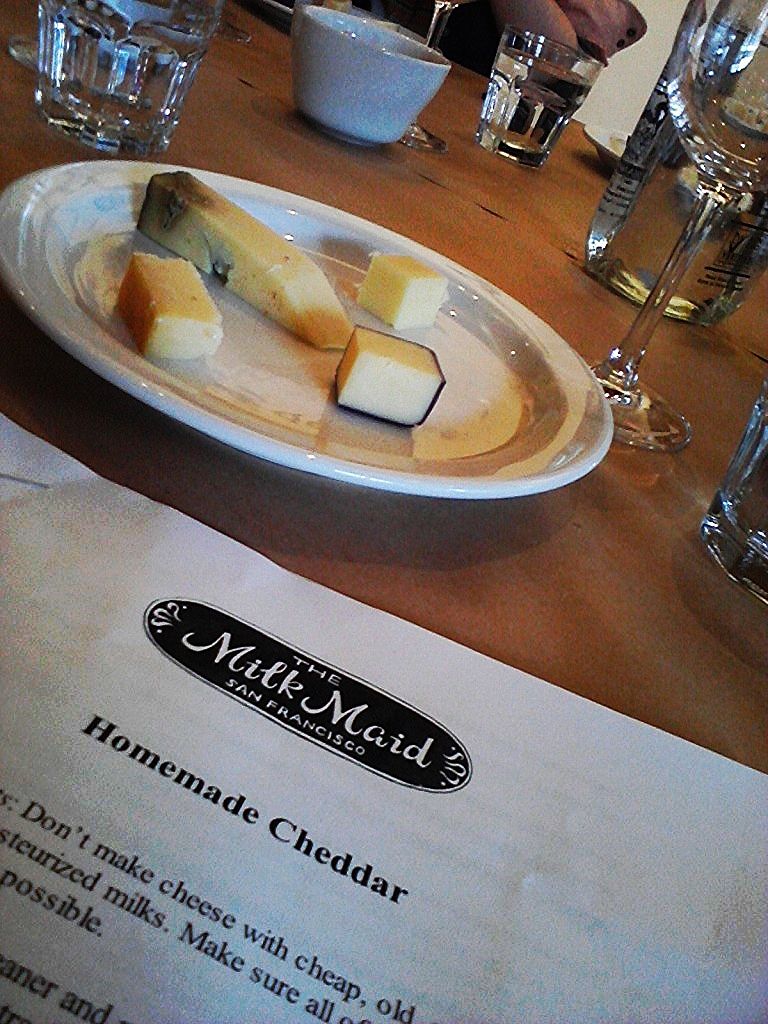
Getting ready to make cheddar. First we taste~on the plate at 1:00: Fresh Tillamook cheddar, moist and buttery. Mild. Supermarket shrink wrap. @4:00 Cabot Vintage Cheddar-one of my favorites-still fairly moist and buttery, much tangier than the Tillamook. This has been my go-to everyday cheese for the last year. It's a wax coated cheese. Aged ??? @8:00 Cabot Clothbound Cheddar or what is also called bandage wrapped. The flavor is so much more intense than the previous cheeses. Finally @10:00 Keen's Cheddar from England. It's got a big moldy veins. YUM! Drier and even more intense than the Cabot. Saltier, savorier. good stuff.
Raw milk is gently heated to 91 degrees, cultured buttermilk is added, then rennet (the enzyme that creates curdling). About 30 minutes later you have a pot of what basically feels like custard. With a knife you start slicing through the custard in straight line cuts a half inch apart, turn the pot 45 degrees and cut again forming 1/2 " grid cuts. Moisture is releasing and here comes the whey.
Then with a flat straining ladle, start making horizontal cuts and gently stir.
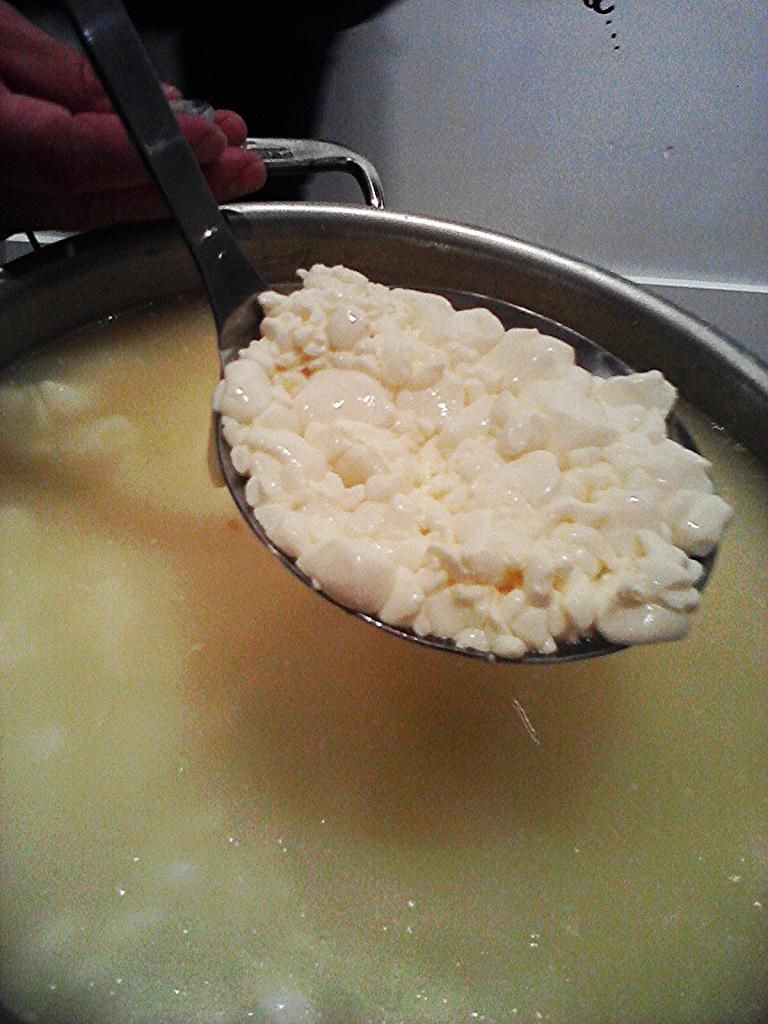
After 30 minutes of stirring the curds, and maintaining the 91 degree temperature, break up smaller and smaller until you end up with something that looks like loose cottage cheese, temp increases to 105 and stirred for another 15 minutes.
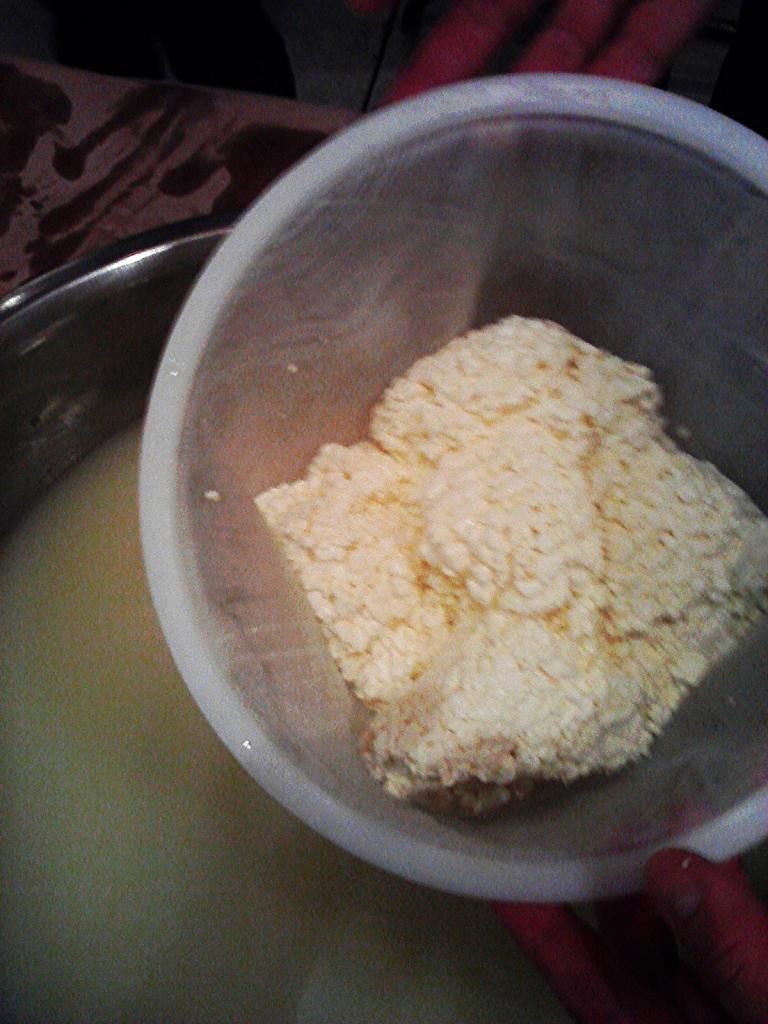
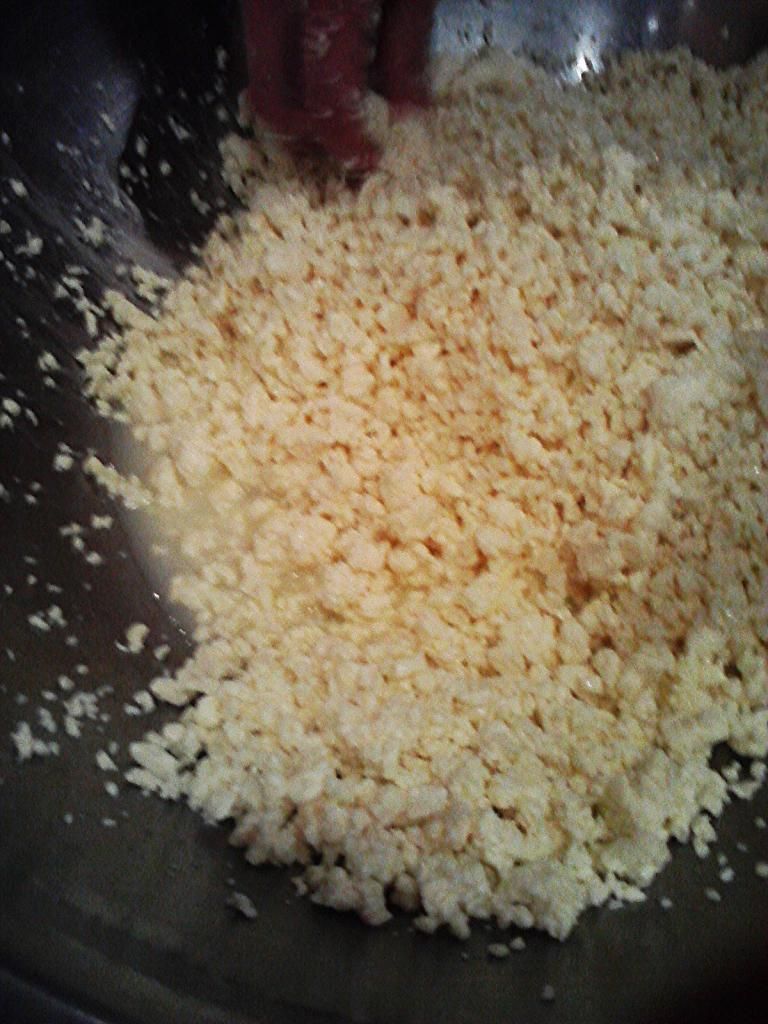
Drain and place the curd, which has clumped into a large mass, in a large bowl and break apart and crumble with your fingers. The thing that surprised me the most was the sweetness of the whey. It made me very sad to see it go down the sink. Traditional ricotta is made from cooked whey.
The curd is still releasing moisture. The curds are scooped up and put in the straining basket and then pressed.
We got cheese...well sorta. This round was only lightly pressed to form it into a wheel that we could all take a picture of. What really happens is that the curd is left in the press overnight with 50 pounds of weight on it to extract all of the moisture. Aged cheddar has to be super dry so as not to mildew while it ages.
Once the wheel has been compressed overnight, it's left to sit out for a day or two in order to dry out and form a skin.
At this point in the class we were each given a small wheel which had been previously made, so that we could commence with the wrapping. We cut up strips and circles of clean white cotton, dipped the "bandages" in bacon fat and wrapped the cheese to protect the cheese while it ages.
We were given little plastic mesh mats and instructed to age our cheese in a zip lock bag in the vegetable drawer of the refrigerator or better yet- in our wine refrigerator <snort>. The cheese needs to be turned every day.
This is called affinage, the care and aging of cheese.Stay tuned.


Thursday, April 3, 2014

shaved vegetable salad


shaved vegetable salad, originally uploaded by michele wynne.
One of the most valuable lessons (so far) I learned in cooking class at 18 Reasons (or The Big Kitchen as like to call it), is the layered salad. This taste-bud tantalizing method of salad building can turn a mountain of veg into an empty plate and a full belly in no time. I never tire of these.
The beauty of this method is that the variety of textures and flavors make each bite taste different- your palate is continuously engaged, as opposed to tossing everything together with your dressing resulting in a salad that can get boring before it's been finished. This is insanely good. By the time I finished building this it was mountainous. I was reading a book while eating and it seemed quite suddenly my plate was empty.


This Shaved Fennel Salad was a riff on the Buttermilk Farro Salad (link below) I made last week from 101 Cookbooks. I had some of those same veggies left and lots of the buttermilk dressing to use up (which I mixed with a little home made mayo). Build the salad on a large plate or a platter, using 1/2 of each ingredient then repeating the layers. This particular salad went down like this:


arugula
shaved fennel
shaved black Spanish radish
shaved French breakfast radishes
shaved zucchini coins
sliced toasted almonds
chopped dried cranberries
crumbled goat cheese
buttermilk dressing
salt
pepper

Depending on whether the salad is dinner for one or one course of a larger gathering you can scale the number of ingredients up or down.
-Some kind of green: arugula, baby spinach, kale, little gems, spring mix
-2 or 3 (at the most) shaved, thinly sliced or grated vegetables
-toasted nuts
-fruit for sweetness-golden raisins or other dried fruit or mangoes or apples or mandarins
-cheese-goat, feta, shaved parmesan or blue cheese...I like salty cheeses
-salt
-pepper
-dressing drizzled lightly-lemon juice & olive oil work just fine.
Remember to build the salad in two layers.

I've also added avocado or sliced hard boiled eggs to make this a meal.

Wednesday, October 9, 2013

Layered Breakfast Salad


Breakfast Salad, originally uploaded by michele wynne.
I really do love salads yet I rarely make them. By the time I've collected up my favorite salad components, rinsed, dried and chopped, sliced and slivered...well...it just seems like an awful lot of work when all is said and done for something that is essentially a side dish. It's kind of like exercising...I'll make every excuse not to do it, but once I've convinced myself to start I really enjoy it, even though more often than not, once I've enjoyed the first salad or two, I still end up with a lot of sad produce that I just can't manage to use up.
 
I am newly inspired by a couple of things:
 
1) Little Gems and Baby Heads!  Small heads of lettuce that are perfect for the single serving salad. I love, love, love the crunchy Little Gems. I'd never seen these before I started working at Bi-Rite.
2) Layered rather than tossed salads-I've taken a couple of cooking classes at 18 Reasons, Bi-Rite's non-profit educational space. The gal who runs the program and teaches many of the classes always builds the salad on platters. Each component is prepped and spread on the plate or platter in two layers and generally consists of no more than 4-5 components including the dressing, which is also drizzled on within the layers. 
3) Gifts from the Grey Box: The salad pictured above started with my culled collection of 3 Little Gems, one Baby Head, one heirloom tomato, a bunch of radishes (sliced paper thin on a mandolin), a red bell pepper (sliced in thin strips) and a handful of romano beans (sliced thinly on the diagonal). Lastly, some slivered basil.
 
My go to dressing is a honey Dijon vinaigrette:
1/3 cup Olive Oil
2 tablespoons of lemon juice
1 clove garlic finely minced and smashed
1 tablespoon Dijon
1 teaspoon honey or agave nectar
a pinch of salt
a couple of grinds of fresh pepper
1 thinly sliced scallion
 
I put all the dressing components into a small jam jar and shake it like crazy to emulsify.
 
The  dinner salad was topped with a little of my new favorite cheese, L'Amuse Gouda. The eggs were added to the next-day breakfast leftovers which held up surprisingly well. What I didn't use the night before, when I started layering on my salad plate, I put into a plastic sandwich container, keeping each component in it's own little pile within the single container.

The only thing missing is bacon!

Update: I just found this article as I was looking up the Little Gem. It includes and interview with Simon, our produce buyer at Bi-Rite.